
AI and Intelligent Automation
Hyperautomation explained: how RPA, AI and BPM work together
23 June 20265 min read
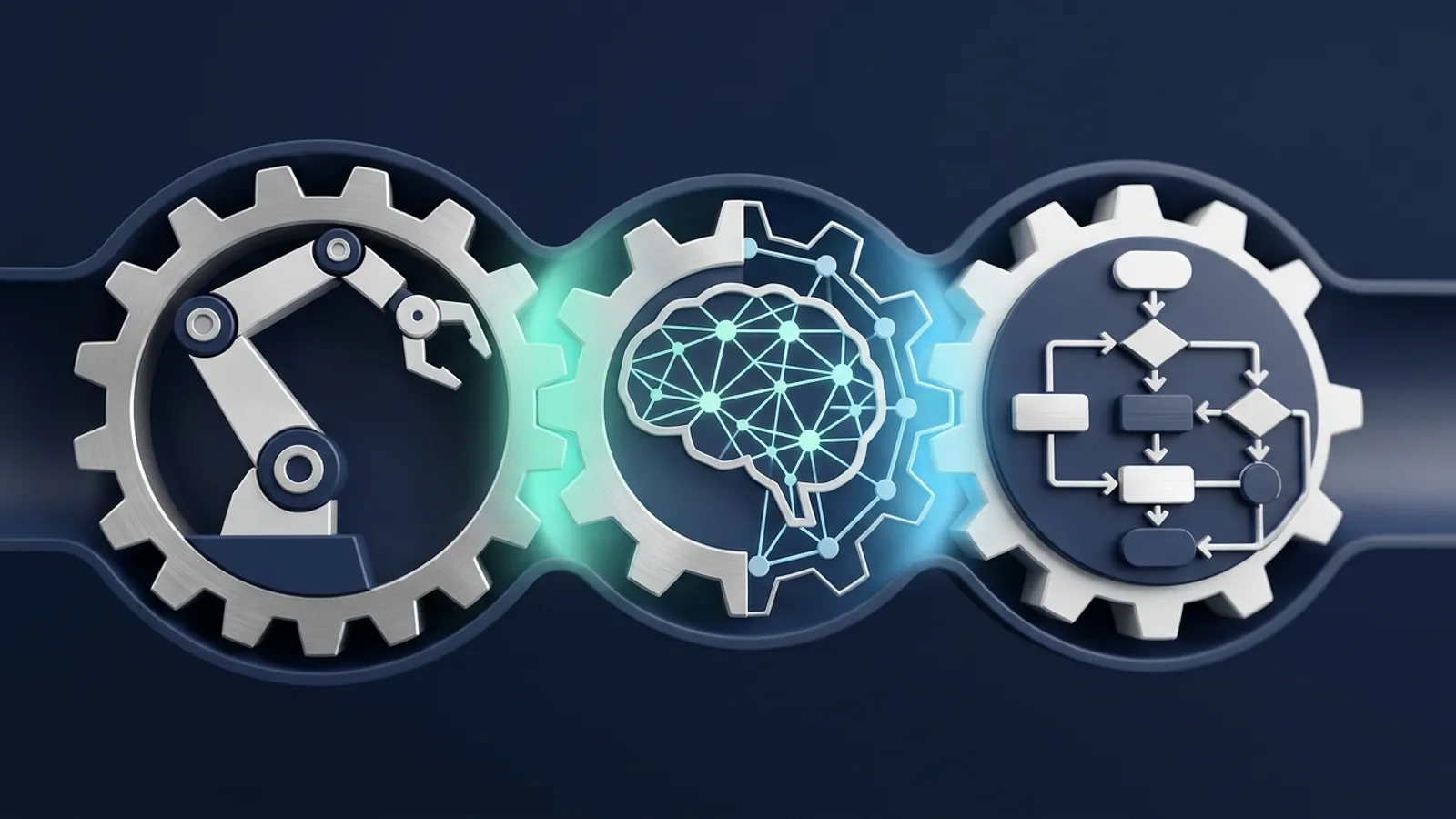
Hyperautomation is one of the most used words in enterprise technology, and one of the least understood. Strip away the noise and it describes something practical. Use the right tool for each part of a process, and orchestrate them on one platform so work flows from end to end.
Three technologies, three jobs
Robotic Process Automation handles repetitive, rules-based tasks, such as moving data between systems that do not talk to each other. Business Process Management orchestrates the whole flow, including the people, the approvals and the rules. Artificial intelligence adds judgement, reading documents, classifying requests and spotting anomalies.
- RPA for repetitive, structured tasks.
- BPM for orchestration, governance and human steps.
- AI and machine learning for understanding and decisions.
- Process analytics to show what is working and what is not.
Why they belong on one platform
Bolting these tools together with custom code creates fragile automation that is hard to maintain. A low-code platform that already includes workflow, rules, integration and AI lets you compose them as reusable assets. The process stays governed, and each step gets smarter without a rebuild.
Where to start
Begin with a process that has both repetitive work and decisions. Accounts payable is a good example. RPA pulls the invoice data, AI reads and validates the document, BPM routes exceptions to the right person, and analytics surface the bottlenecks. You get a measurable win, and a pattern you can reuse.
Hyperautomation is not a product you buy once. It is a capability you build, one governed process at a time. As an AI-led automation partner in the region, that is how we help enterprises move from isolated tools to genuine end-to-end results.
Ready to put this into practice?
Talk to our team about automating your highest-value processes.
Request a Demo